

Hey there! As a supplier of Fiber Optic Web Guide Sensors, I often get asked about the polarization characteristics of these nifty devices. So, let's dive right into it and break down what polarization means for our Fiber Optic Web Guide Sensors.
First off, polarization in the context of fiber optics refers to the orientation of the electric field vector of light as it travels through the optical fiber. This might sound a bit technical, but it's super important for the performance of our sensors. You see, light can be polarized in different ways, and how it interacts with the fiber and the web material it's monitoring has a big impact on the accuracy of our sensors.
One of the main polarization characteristics of a Fiber Optic Web Guide Sensor is linear polarization. In a linearly polarized light wave, the electric field vector oscillates in a single plane. This type of polarization is useful because it allows us to control and manipulate the light in a more predictable way. Our sensors can use linearly polarized light to detect the edges of the web material with high precision. By analyzing the way the polarized light is reflected or absorbed by the web, we can determine its position and alignment.
Another important aspect is circular polarization. In circularly polarized light, the electric field vector rotates in a circular motion as the light travels. This can be beneficial in situations where the web material has irregular surfaces or where there are multiple reflections. Circular polarization can help reduce the effects of polarization-induced intensity variations, which can improve the stability and reliability of our sensors.
Now, you might be wondering how these polarization characteristics compare to other types of web guide sensors. Well, let's take a look at some of the alternatives. There's the Ultrasonic Web Guide Sensor, which uses ultrasonic waves to detect the position of the web. These sensors are great for detecting the edges of opaque or semi - opaque materials, but they don't rely on light polarization at all. On the other hand, the CCD Web Guide Sensor uses a charge - coupled device to capture an image of the web. While it's very accurate in many cases, it has a different set of principles and doesn't directly deal with polarization as the fiber optic one does.
The Infrared Web Guide Sensor operates in the infrared spectrum. Infrared light also has polarization properties, but the way it interacts with the web is different from visible light used in fiber optic sensors. Similarly, the Laser Web Guide Sensor uses laser light, which can be highly polarized. However, the application and the way it measures the web position might vary compared to our Fiber Optic Web Guide Sensor.
One of the advantages of our Fiber Optic Web Guide Sensor's polarization characteristics is its ability to adapt to different types of web materials. Whether it's a shiny metallic film or a dull paper web, we can adjust the polarization of the light to optimize the detection. For instance, if the web material has a high reflectivity, we can use a specific polarization state to reduce the glare and get a more accurate reading.
But how do we actually achieve and control these polarization states in our sensors? Well, we use a combination of polarizers and waveplates. Polarizers are optical components that allow only light with a specific polarization direction to pass through. Waveplates, on the other hand, can change the polarization state of light. By carefully selecting and arranging these components, we can tailor the polarization of the light used in our sensors to match the requirements of different applications.
In addition to improving the accuracy of edge detection, the polarization characteristics of our Fiber Optic Web Guide Sensor also contribute to their high - speed performance. In high - speed web processing applications, every millisecond counts. Our sensors can quickly analyze the polarization - related signals and provide real - time feedback to the web guiding system. This allows for rapid adjustments to be made, ensuring that the web stays in the correct position even at very high speeds.
Another benefit is the immunity to electromagnetic interference. Since our sensors rely on light polarization rather than electrical signals, they are less susceptible to the interference that can plague other types of sensors in industrial environments. This makes them a reliable choice for factories and manufacturing plants where there are a lot of electrical devices and machinery.

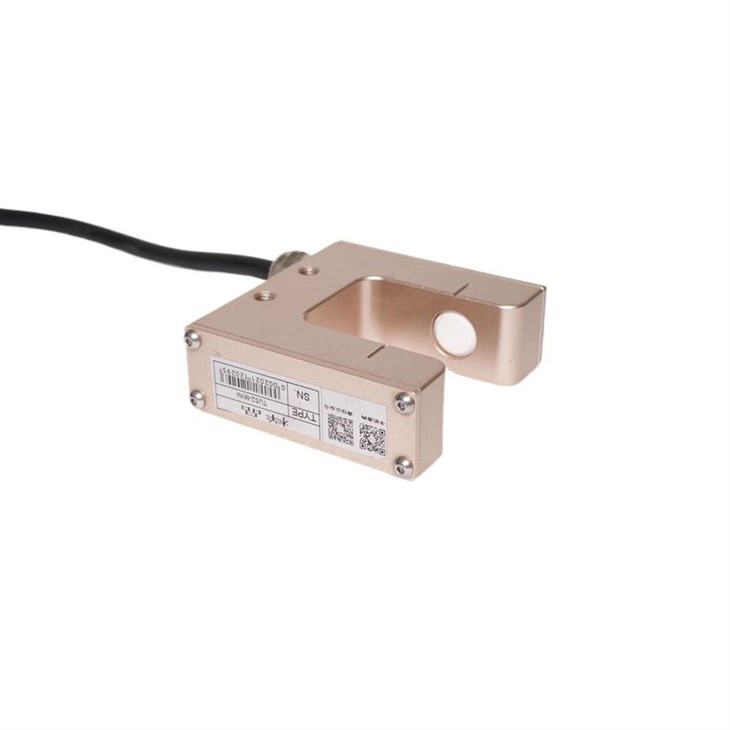
Moreover, the polarization - based design of our Fiber Optic Web Guide Sensor offers better resolution. We can detect even the smallest changes in the web position, which is crucial for applications that require high - precision web guiding, such as in the production of electronic components or high - quality printing.
So, if you're in the market for a web guide sensor and you're looking for something that can offer high - accuracy, high - speed performance, and reliability, our Fiber Optic Web Guide Sensor is definitely worth considering. You can check out more details about it on our Fiber Optic Web Guide Sensor page.
If you have any specific questions about the polarization characteristics, or if you're interested in discussing a potential purchase, don't hesitate to reach out. We're here to help you find the best solution for your web guiding needs. Whether you're running a small - scale operation or a large - scale manufacturing plant, we've got the expertise and the products to make your web processing more efficient. So, come on and let's start a conversation about how our Fiber Optic Web Guide Sensor can benefit your business!
References:
- Optics textbooks on fiber optics and polarization
- Industry reports on web guide sensor technologies