

Your Professional Web Guide System Manufacturer & Supplier
Surmach Industrial Equipment (Suzhou) Co., Ltd. specializes in the R&D and manufacturing of web guiding systems, micron-level non-contact cleaning systems, tension control systems, and corona and plasma treatment equipment. Founded in 2007, the company combines engineering development, manufacturing, and turnkey project services. Its solutions are widely used in lithium batteries, printing, packaging, hygiene products, papermaking, rubber tires, films, and other high-speed roll-to-roll production industries.


Why Choose Us
Advanced Facilities
The company is equipped with CNC machining centers, precision machining workshops, and cleanroom laboratories. Combined with micron-level inspection processes and online dust detection systems, the company ensures stable precision and reliable performance in continuous industrial operation.
Production Capacity
We have an annual output capacity of 4,000 web guiding systems, 400 web cleaning systems, and several hundred sets of tension control, corona treatment, and plasma treatment equipment, supporting both standard and customized projects.
Certifications
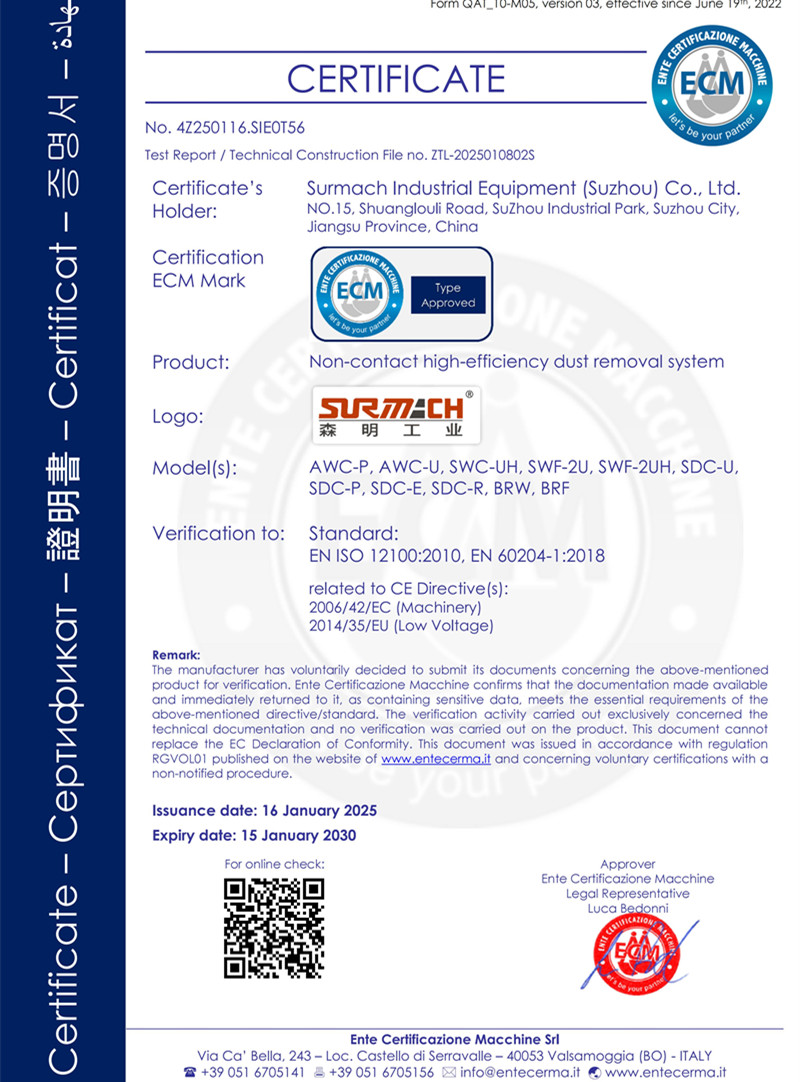
The company is certified with ISO 9001 and CE standards. These certifications ensure strict quality control throughout design, production, and testing, guaranteeing consistent product quality for global customers.
Turnkey Engineering Services
We provide full project support including technical consulting, system design, installation, commissioning, and 24/7 after-sales service, ensuring stable long-term equipment operation and reliable customer support.
Specification
|
Roller Diameter |
75/80/100/120mm |
|
Roller Length |
750~2500mm (varies by model) |
|
Steering Frame Width Range |
Customizable |
|
Stroke length and Guide Angle |
±25mm/±5° |
|
Maximum Tension |
<5000N |
|
Power Input |
24VDC, 6~10A |
|
Span Between 2 Rollers |
600/800mm (customizable) |
|
Maximum Drive Speed |
35mm/s |
|
Environment Temperature |
-10~60°C (relative humidity below 90%) |
Advantages Of Web Guide System
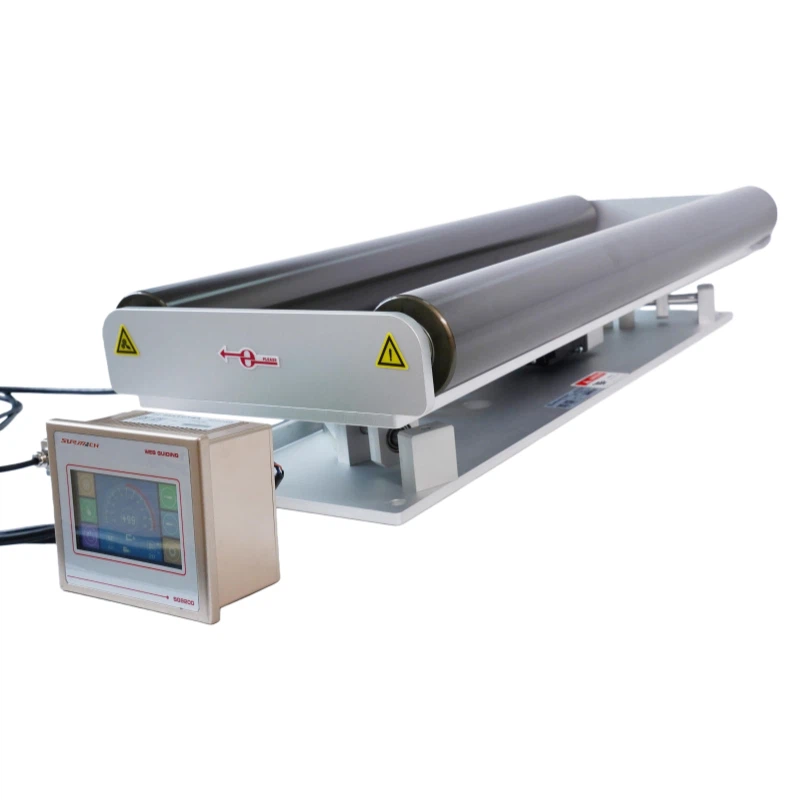


Enhanced Precision and Accuracy
Misalignment difficulties during the printing process are corrected using web guide systems. They ensure accurate color and picture registration, minimizing waste and enhancing print quality. These systems enable printers to generate consistently aligned and high-quality prints, even at high speeds, due to their ability to accurately guide the web through the printing machine.
Increased Production Efficiency
In the printing industry, downtime and setup time can have a significant influence on productivity. Web guide systems reduce these pauses by quickly correcting any changes in the alignment of the web. This allows for quicker printing speeds, fewer manual interventions, and continuous operation, resulting in increased production efficiency.
Cost Savings
Web guide systems offer significant cost savings in an industry where material waste and rejections can have a significant influence on profitability. These technologies help to enhance operational efficiency by decreasing misprints, reducing material waste, and maximizing resource utilization. Furthermore, prompt detection and rectification of web misalignments helps to save costly rework and reprinting costs.
Flexibility and Adaptability
The printing industry includes many different substrates, printing techniques, and formats. These complications are adequately handled by web guide systems. These systems handle different web widths, adapt to diverse formats, and allow for rapid changeovers regardless of the substrate type or printing method utilized. Their flexibility and adaptability enable printers to meet the evolving demands of customers efficiently.
Quality Assurance
The printing business places a premium on consistency and quality. Web guide systems are critical in ensuring print consistency and repeatability. These technologies ensure that every printed product meets the highest requirements by eliminating flaws such as creases, misalignments, and print irregularities. As a result, client satisfaction rises, and printing companies' reputations improve.
Integration with Digitalization
Web guide systems are easily integrating with digital workflow systems as the printing industry embraces digitalization. They provide real-time monitoring and control, allowing operators to make changes on the fly. This integration improves overall operational efficiency and productivity by facilitating data analysis, process optimization, and predictive maintenance.
Wide Application Range
Web guide systems are used in a variety of printing industries, including labels, packaging, newspapers, and others. They work with a variety of printing technologies, including flexography, gravure, and offset printing. Furthermore, these systems are adaptable to a wide range of printing conditions, with varying printing speeds, tension needs, and web qualities.
Types of Web Guide System
Pivoting frame webguide systems
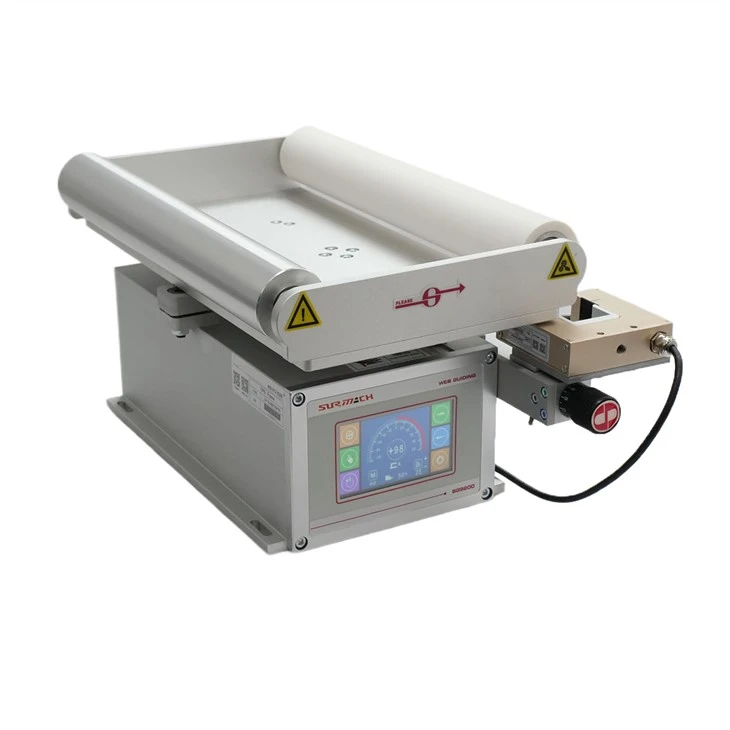
Are the most common solution when the web needs to be corrected along its path. The pivoting frame is a mechanical structure with two rollers that rotates around an offset pivot point, either physical or virtual, as in Re systems. This movement changes the path of the material and corrects its lateral position. These systems are widely used because they are compact, effective and suitable for many converting applications.
Steering roller webguide systems
Steering rollers are also used within the process, but they are generally preferred when the incoming web span is long, typically from two to five times the web width. In this case, the system corrects the material shifting it laterally while rotating it at the same time. Depending on the configuration, one or two rollers may be used.
Linear actuators
Linear actuators are often used on unwinders or rewinders, especially in compact machines. Instead of correcting the web path in an intermediate section of the line, they move the entire carriage so that the material starts from the correct position during unwinding or is accurately followed during rewinding. This helps produce reels with a flatter and more regular profile.
Main Components of Web Guide System

An effective web guide system is based on three main elements that must work continuously and with high precision: Sensors, controller and actuator.
The operating logic is this: Detect the deviation -> calculate the correction -> move the system -> restore alignment -> continuous cycle.
The sensor: The eye of the system
They detect the position of the material in real time and provide the feedback signal used for correction. Depending on the material and on the type of reference to be detected, sensors are generally divided into three main groups:
- Ultrasonic sensors, suitable for opaque or reflective materials.
- Infrared sensors, often used for sound-absorbing materials such as certain textiles or nonwovens.
- Optical sensors, ideal for detecting colour contrasts, printed lines or patterns.
The control unit: The brain of the system
The control unit receives the signal from the sensor, compares it with the desired position and sends the command to the actuator.
The actuator: The system's operator
It receives the instruction from the controller and changes the web position through the guiding mechanism.
Working Process of Web Guide System
A web guide system monitors the position of the moving material and applies real-time corrections to keep it aligned within predefined tolerances. It does not simply correct misalignment after it occurs, but works as a continuous loop based on detection, processing and correction.
Its operation can be summarised in three steps:
Detection. Sensors read the edge of the material or a color contrast on it and send real-time position data.
Processing. A controller analyses the deviation, compares the actual web position with the reference position and calculates the required correction.
Correction. An actuator moves the web or the guiding roller in order to bring the material back to the desired position.
This cycle repeats continuously while the line is running. Because the system reacts in real time, it is especially effective in high-speed or high-precision applications where manual adjustment would be too slow and inaccurate.
Applications of Web Guide System
Printing
Where web guiding helps maintain register.
Packaging
Where it supports precise folding and sealing.
Slitting
Where it ensures the material is cut in the correct position.
Laminating and coating
Where it contributes to the precise overlap of multiple materials.
Battery production
Where alignment is essential for electrode coating
Nonwoven and hygiene applications
Where multiple materials must be accurately combined.
Customization Services
To better meet the diverse needs of different industries and clients, we can provide customized web guide system solutions based on different web materials, guiding accuracy, installation structures, line speed, and production requirements. For more information or support, please feel free to contact us.
Packaging and Shipping
|
Packaging |
Standard export wooden case or plywood case |
|
Transportation methods |
By sea, air, railway, or express delivery |
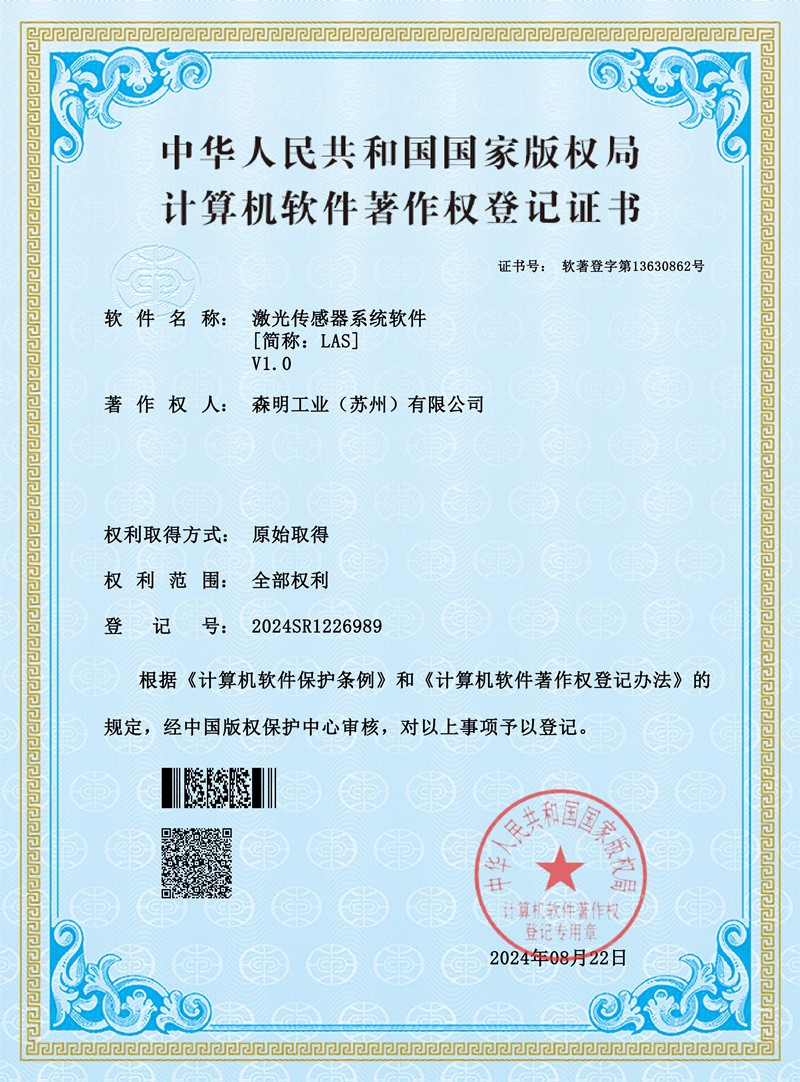
Our Certificate



FAQ
We're well-known as one of the leading web guide system manufacturers and suppliers in China. With abundant experience, we warmly welcome you to buy customized web guide system made in China here from our factory. For price consultation, contact us.
Web Winding Guide, Web Guide with Splice Table, web aligner system