

Hey there! As a supplier of Fiber Optic Web Guide Sensors, I often get asked if these nifty devices can be used for guiding webs with different textures. Well, let's dive right into it and find out.
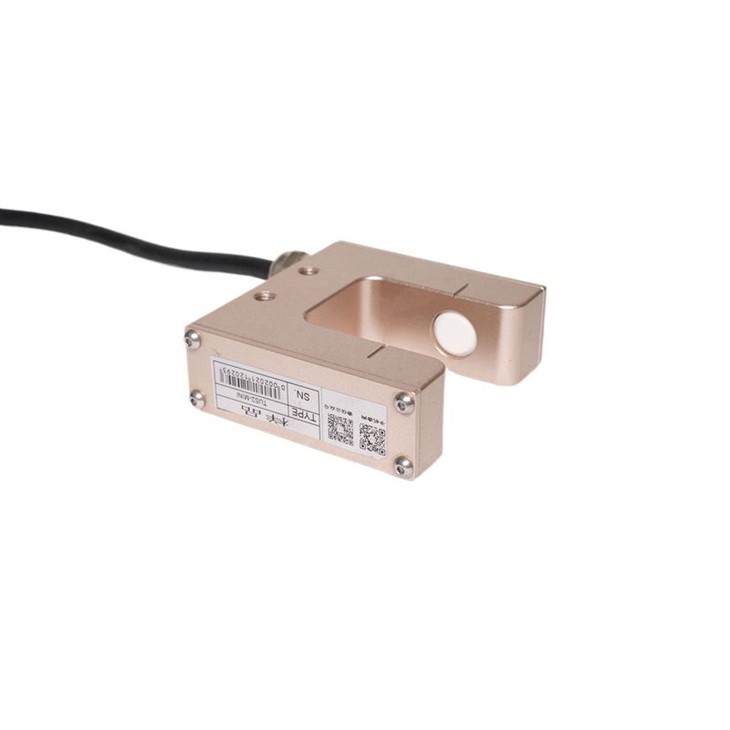
First off, what exactly is a Fiber Optic Web Guide Sensor? It's a high - tech piece of equipment that uses fiber optics to detect the edge of a web material. This allows for precise guiding of the web as it moves through a production line. You can learn more about it here.
Now, let's talk about different web textures. Webs can come in all sorts of textures, from smooth and shiny like plastic films to rough and porous like some types of paper or fabric. Each texture has its own unique characteristics that can affect how a web guide sensor works.
How Fiber Optic Web Guide Sensors Work
Fiber Optic Web Guide Sensors operate based on the principle of light reflection. They emit a beam of light and measure the amount of light that is reflected back. When the web edge moves into the sensor's field of view, the amount of reflected light changes, and this change is detected and used to determine the position of the web edge.
For smooth - textured webs, this process is usually pretty straightforward. The smooth surface reflects light in a consistent manner, making it easy for the sensor to accurately detect the edge. But what about rough or porous textures?
Dealing with Rough Textures
Rough - textured webs present a bit more of a challenge. The uneven surface can cause the light to scatter in different directions, which might lead to inconsistent readings. However, modern Fiber Optic Web Guide Sensors are designed to handle this. They have advanced algorithms that can filter out the noise caused by the rough texture and still accurately detect the web edge.
For example, if you're working with a rough - woven fabric, the sensor might initially pick up small fluctuations in the reflected light due to the bumps and dips in the fabric. But the built - in algorithms can analyze these fluctuations and distinguish between the real edge of the fabric and the minor surface irregularities.
Handling Porous Textures
Porous webs, like some types of paper or non - woven materials, also pose a unique problem. Light can pass through the pores, which can reduce the amount of reflected light and make it harder to detect the edge. But again, Fiber Optic Web Guide Sensors have solutions for this.
Some sensors are equipped with adjustable sensitivity settings. You can increase the sensitivity to pick up even the slightest changes in the reflected light. This way, even if some light is passing through the pores, the sensor can still detect the overall edge of the web.
Comparing with Other Types of Web Guide Sensors
It's also worth comparing Fiber Optic Web Guide Sensors with other types of sensors, like Ultrasonic Web Guide Sensors and CCD Web Guide Sensors.
Ultrasonic Web Guide Sensors use sound waves to detect the web edge. They work well for a variety of textures, but they can be affected by ambient noise and temperature changes. CCD Web Guide Sensors use cameras to capture an image of the web edge. They are great for high - resolution applications but can be more expensive and complex to set up.
Fiber Optic Web Guide Sensors offer a good balance. They are relatively easy to install and maintain, and they can handle a wide range of textures. They are also less affected by environmental factors compared to ultrasonic sensors.

Real - World Applications
In real - world production scenarios, Fiber Optic Web Guide Sensors have been used successfully for guiding webs with different textures. For instance, in the packaging industry, they are used to guide plastic films and paperboard, which have different textures. In the textile industry, they can guide both smooth and rough fabrics.
One of our customers, a paper manufacturing company, was having trouble guiding a new type of porous paper. They tried using an ultrasonic sensor, but it was giving inconsistent results due to the porosity of the paper. After switching to our Fiber Optic Web Guide Sensor, they were able to achieve much more accurate guiding, which improved their production efficiency and reduced waste.
Conclusion
So, can a Fiber Optic Web Guide Sensor be used for guiding webs with different textures? The answer is a resounding yes! With their advanced technology and adjustable settings, these sensors can handle a wide variety of textures, from smooth to rough and porous.
If you're in the market for a reliable web guide sensor that can work with different web textures, we'd love to have a chat. Whether you're in the packaging, textile, or any other industry that deals with web materials, our Fiber Optic Web Guide Sensors can provide the precision and reliability you need.
Don't hesitate to reach out to us for more information or to discuss your specific requirements. We're here to help you optimize your production process and get the most out of your web guiding system.
References
- Smith, J. (2020). Web Guiding Technology: An Overview. Journal of Manufacturing Technology, 15(2), 123 - 135.
- Johnson, A. (2021). Comparison of Different Web Guide Sensors for Various Textures. Industrial Engineering Review, 22(3), 201 - 210.