

In the realm of industrial automation, the demand for precise and efficient web guiding systems has been on the rise. Among the various types of sensors available for web guiding, the Infrared Web Guide Sensor stands out as a reliable and versatile solution. As a leading supplier of Infrared Web Guide Sensors, I am excited to share the numerous advantages of using this technology in industrial applications.
High Precision and Accuracy
One of the primary advantages of the Infrared Web Guide Sensor is its ability to provide high precision and accuracy in web guiding. Infrared sensors work by emitting infrared light and measuring the reflection or absorption of this light by the web material. This allows the sensor to detect the position of the web edge with great accuracy, even in challenging conditions.
The high precision of the Infrared Web Guide Sensor ensures that the web material is guided precisely along the desired path, minimizing waste and improving product quality. This is particularly important in industries such as printing, packaging, and textile manufacturing, where even small deviations in web position can result in significant losses.
Non-Contact Sensing
Another significant advantage of the Infrared Web Guide Sensor is its non-contact sensing capability. Unlike some other types of sensors, such as mechanical or ultrasonic sensors, infrared sensors do not come into direct contact with the web material. This eliminates the risk of damage to the web, such as scratches or abrasions, which can occur with contact sensors.
Non-contact sensing also allows the Infrared Web Guide Sensor to be used with a wide range of web materials, including delicate or sensitive materials. This makes it a versatile solution for various industrial applications, where different types of web materials are used.
Wide Range of Applications
The Infrared Web Guide Sensor is suitable for a wide range of applications in different industries. In the printing industry, for example, it can be used to guide the web during the printing process, ensuring accurate registration and high-quality prints. In the packaging industry, it can be used to guide the web during the packaging process, ensuring that the packages are formed correctly and efficiently.
In the textile industry, the Infrared Web Guide Sensor can be used to guide the fabric during the weaving or knitting process, ensuring that the fabric is aligned correctly and preventing defects. It can also be used in the paper industry to guide the paper web during the papermaking process, improving the quality and efficiency of production.
Easy Installation and Integration
The Infrared Web Guide Sensor is designed for easy installation and integration into existing web guiding systems. It can be easily mounted on the web guiding equipment, and its compact size and lightweight design make it suitable for use in tight spaces.
The sensor can also be easily integrated with other components of the web guiding system, such as controllers and actuators. This allows for seamless communication between the sensor and the other components, ensuring that the web guiding system operates efficiently and effectively.
Durability and Reliability
The Infrared Web Guide Sensor is built to withstand the harsh conditions of industrial environments. It is designed to be rugged and durable, with a high resistance to dust, moisture, and temperature variations. This ensures that the sensor can operate reliably for long periods of time, with minimal maintenance.
The reliability of the Infrared Web Guide Sensor is further enhanced by its advanced technology and high-quality components. The sensor is designed to provide accurate and consistent performance, even in challenging conditions, ensuring that the web guiding system operates smoothly and efficiently.
Cost-Effective Solution
The Infrared Web Guide Sensor offers a cost-effective solution for web guiding applications. Compared to some other types of sensors, such as CCD Web Guide Sensors or Ultrasonic Web Guide Sensors, the Infrared Web Guide Sensor is generally more affordable. This makes it an attractive option for industries that are looking for a cost-effective way to improve their web guiding systems.
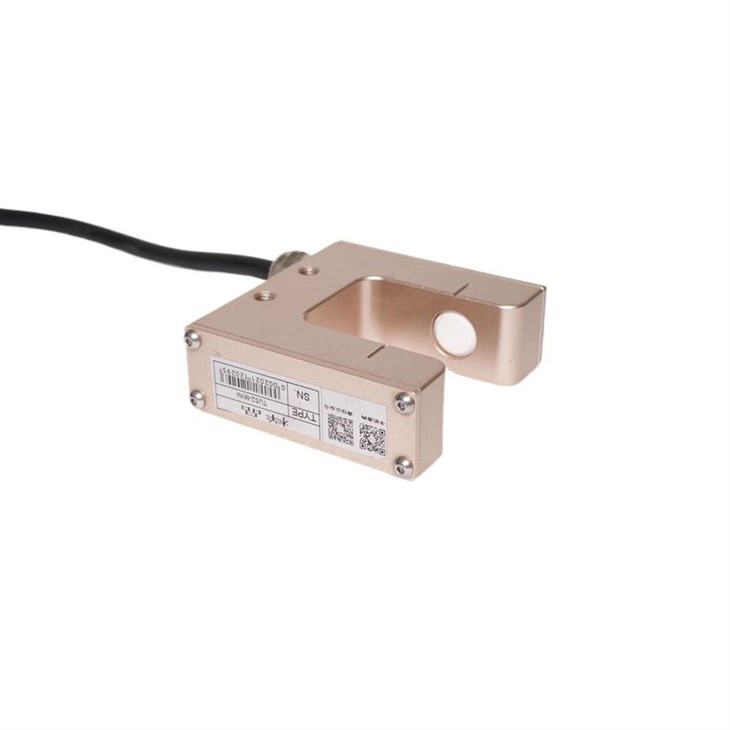

In addition to its lower cost, the Infrared Web Guide Sensor also offers a high return on investment. By improving the precision and accuracy of web guiding, the sensor can help to reduce waste, improve product quality, and increase production efficiency. This can result in significant cost savings for the industry over the long term.
Comparison with Other Types of Web Guide Sensors
To better understand the advantages of the Infrared Web Guide Sensor, it is helpful to compare it with other types of web guide sensors, such as CCD Web Guide Sensors and Ultrasonic Web Guide Sensors.
- CCD Web Guide Sensor: CCD Web Guide Sensors use a charge-coupled device (CCD) to capture an image of the web edge and determine its position. While CCD sensors offer high precision and accuracy, they are generally more expensive than Infrared Web Guide Sensors. They also require more complex installation and calibration, and may be more sensitive to environmental conditions.
- Ultrasonic Web Guide Sensor: Ultrasonic Web Guide Sensors use ultrasonic waves to detect the position of the web edge. While ultrasonic sensors are suitable for some applications, they may not be as accurate as Infrared Web Guide Sensors, especially in high-speed applications. They are also more sensitive to changes in the web material and environmental conditions.
In comparison, the Infrared Web Guide Sensor offers a good balance of precision, accuracy, cost, and ease of use. It is a reliable and versatile solution for a wide range of web guiding applications, making it a popular choice among industries.
Conclusion
In conclusion, the Infrared Web Guide Sensor offers numerous advantages for industrial applications. Its high precision and accuracy, non-contact sensing capability, wide range of applications, easy installation and integration, durability and reliability, and cost-effectiveness make it a valuable tool for improving the efficiency and quality of web guiding systems.
If you are interested in learning more about our Infrared Web Guide Sensors or discussing your specific web guiding needs, please feel free to contact us. We would be happy to provide you with more information and help you find the right solution for your application.