

A split body web guide is an essential component in many industrial processes, particularly those involving the handling of continuous webs of materials such as paper, film, fabric, and foil. The reliability of a split body web guide is crucial for ensuring smooth operation, minimizing downtime, and improving product quality. As a provider of split body web guides, I understand the importance of this reliability. Here are some key strategies to improve the reliability of a split body web guide.
1. High - Quality Component Selection
The foundation of a reliable split body web guide lies in the quality of its components. When manufacturing our split body web guides, we carefully select each part to ensure durability and performance. For instance, the sensors used in the web guide play a vital role in detecting the position of the web accurately. High - precision optical sensors or ultrasonic sensors can provide more accurate and stable measurements compared to lower - quality alternatives. These sensors are less prone to interference, such as dust or electromagnetic noise, which can lead to incorrect readings and affect the guide's performance.
The mechanical components, like the bearings and linear actuators, also need to be of high quality. Bearings that are made from high - grade steel and have proper lubrication can reduce friction and wear, ensuring smooth movement of the guide structure. Linear actuators with high - precision ball screws or belt drives can provide precise and reliable movement, which is essential for adjusting the web position accurately. When selecting components, we consider factors such as material quality, manufacturing tolerances, and performance specifications to ensure that they can withstand the harsh industrial environments where the web guides are often used.
2. Robust Design and Construction
A well - designed split body web guide can enhance its reliability significantly. Our design team focuses on creating a structure that is not only functional but also sturdy and resistant to external factors. For example, the housing of the web guide is designed to protect the internal components from dust, moisture, and mechanical impacts. We use thick - walled, high - strength materials to construct the housing, which can prevent damage from accidental collisions or exposure to harsh chemicals in the production environment.
In addition, the internal layout of the components is carefully optimized. Components are arranged in a way that allows for easy access and maintenance. This reduces the time required for servicing and replacement, minimizing downtime. For example, the electrical wiring is organized neatly, with proper strain relief and insulation to prevent short - circuits and signal interference. Also, the mechanical parts are designed for easy alignment and adjustment, which can improve the overall performance and reliability of the web guide.
3. Advanced Control System
The control system is the brain of a split body web guide. An advanced control system can improve the guide's reliability by providing accurate and real - time control of the web position. Our split body web guides are equipped with state - of - the - art control algorithms that can adapt to different web materials, speeds, and tension conditions. These algorithms can adjust the guide's movement quickly and precisely to maintain the web in the desired position.
The control system also includes diagnostic functions. It can continuously monitor the performance of the web guide, such as the sensor readings, actuator movements, and power consumption. If any abnormal conditions are detected, the system can issue alerts in time, allowing operators to take preventive measures before a breakdown occurs. For example, if the sensor readings show sudden fluctuations, the control system can indicate a potential problem with the sensor or the web material, and prompt the operator to check and solve the issue.
4. Regular Maintenance and Calibration
Even the most reliable split body web guides require regular maintenance and calibration to ensure long - term performance. We provide comprehensive maintenance guidelines to our customers, which include routine inspections, cleaning, and lubrication of the components. Regular inspections can help detect early signs of wear, damage, or misalignment, allowing for timely replacement or adjustment.
Calibration is also crucial for maintaining the accuracy of the web guide. Over time, factors such as component wear, temperature changes, and mechanical vibrations can affect the sensor's accuracy and the actuator's movement. By calibrating the web guide regularly, we can ensure that it continues to provide precise web positioning. Our calibration procedures are based on strict industry standards, using high - precision measurement tools to guarantee the accuracy of the web guide.
5. Operator Training
Proper operator training is essential for improving the reliability of a split body web guide. We offer training programs for our customers, which cover topics such as web guide operation, maintenance, troubleshooting, and safety. Well - trained operators are more likely to operate the web guide correctly, which can reduce the risk of human - induced errors.
During the training, operators learn how to set up the web guide for different web materials and production requirements. They also learn how to perform basic maintenance tasks, such as cleaning the sensors and lubricating the mechanical components. Additionally, they are taught how to identify and troubleshoot common problems, such as sensor malfunctions or actuator failures, in a timely manner.
6. Complementary Product Integration
Integrating the split body web guide with complementary products can also enhance its reliability. For example, when combined with a Web Winding Guide, the overall web handling process can be more efficient and stable. The web winding guide can ensure proper winding of the web, reducing the stress on the split body web guide during the winding process.
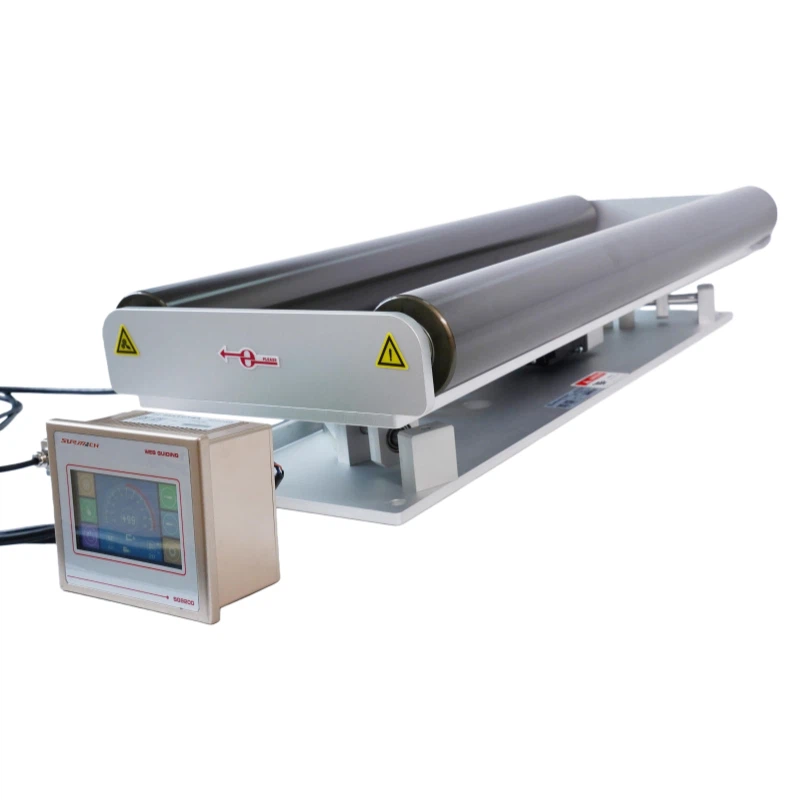

Similarly, integrating a Web Guide with Splice Table can improve the performance of the split body web guide. The splice table can provide a stable platform for web splicing, and the combined system can ensure seamless transition of the web during splicing, which is beneficial for the long - term reliability of the split body web guide.
An All - in - one Web Guide can also be integrated with the split body web guide to provide a more comprehensive web handling solution. The all - in - one web guide can offer additional features such as tension control, which can work in harmony with the split body web guide to improve the overall reliability of the web handling process.
The Web Guide Steering Frame is another product that can be integrated with the split body web guide. The steering frame can provide a stable support and guide structure for the split body web guide, enhancing its movement precision and reliability.
Conclusion
Improving the reliability of a split body web guide is a multi - faceted process that involves high - quality component selection, robust design, advanced control systems, regular maintenance, operator training, and complementary product integration. As a supplier of Split Body Web Guide, we are committed to providing our customers with reliable and high - performance web guides. We believe that by implementing these strategies, we can help our customers improve their production efficiency, reduce downtime, and enhance product quality.
If you are interested in our split body web guides or want to discuss how to improve the reliability of your existing web handling systems, please feel free to contact us for procurement and related discussions. We look forward to providing you with the best solutions for your web handling needs.
References
- Johnson, R. L. (2018). Industrial Web Handling: Principles and Practice. CRC Press.
- Smith, A. B. (2020). Web Guiding Systems: Technology and Applications. Woodhead Publishing.